Buying a shipping container for storage is one of the most practical investments a business or individual can make. These steel units offer a secure, weather-resistant, and portable alternative to building a shed or renting temporary storage month after month, and they can even form the foundation of a shipping container storage business when deployed at scale. Container Management, Inc. is a family-owned wholesaler that specializes in selling new and used containers across the continental U.S., including New One Trip shipping containers, delivering from a nationwide depot network.
Key Takeaways
Shipping containers are available in 10ft, 20ft, and 40ft sizes, with the most popular options for storage being the 20ft, 40ft, and 40ft High Cube. Container Management, Inc. also offers limited 10ft New units from its Chicago depot, plus specialty containers when available. Container conditions include One-Trip, Cargo Worthy, and Wind and Watertight - each grade affects container price, appearance, and export eligibility.
Shipping container cost depends on size, grade, location, and delivery distance. Buyers should always request a detailed free quote with delivery included. Container Management, Inc. sells containers only - no rent, no rent to own, and we do not offer financing - but we do provide ISO Cargo Worthy export certification and nationwide delivery through a trusted trucking network, backed by a family-owned operation with decades of experience. Before you buy shipping containers, verify site prep requirements, access for the delivery truck, and any local permitting needs.
Understanding Shipping Containers as Storage Units
A shipping container - also called a Conex box, freight container, or cargo container - is an enclosed steel structure built to ISO standards for intermodal transportation by ship, rail, and truck. That same durability makes these units ideal for secure on-site storage of business inventory, equipment, tools, seasonal items, and personal belongings on construction sites, farms, commercial properties, and private land.
Container Management, Inc. sells these containers for ground storage and export as Shipper Owned Containers (SOC), offering
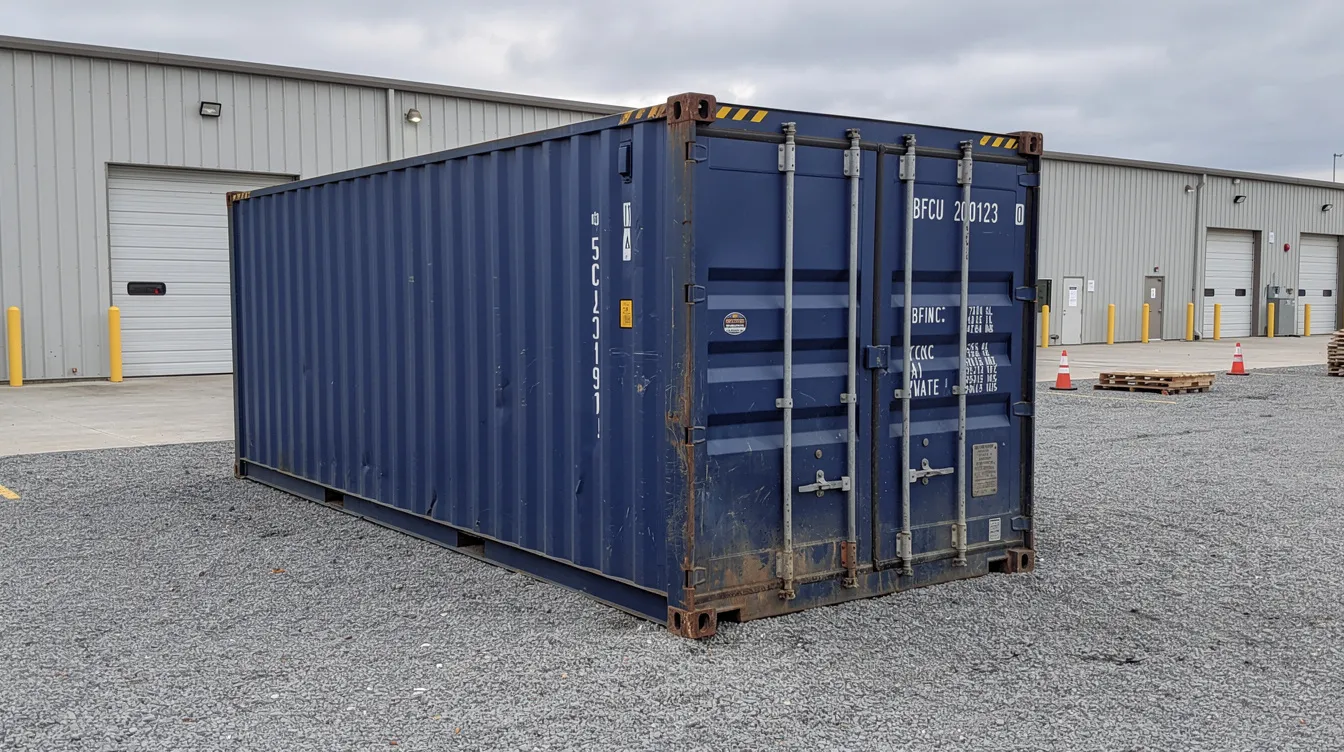
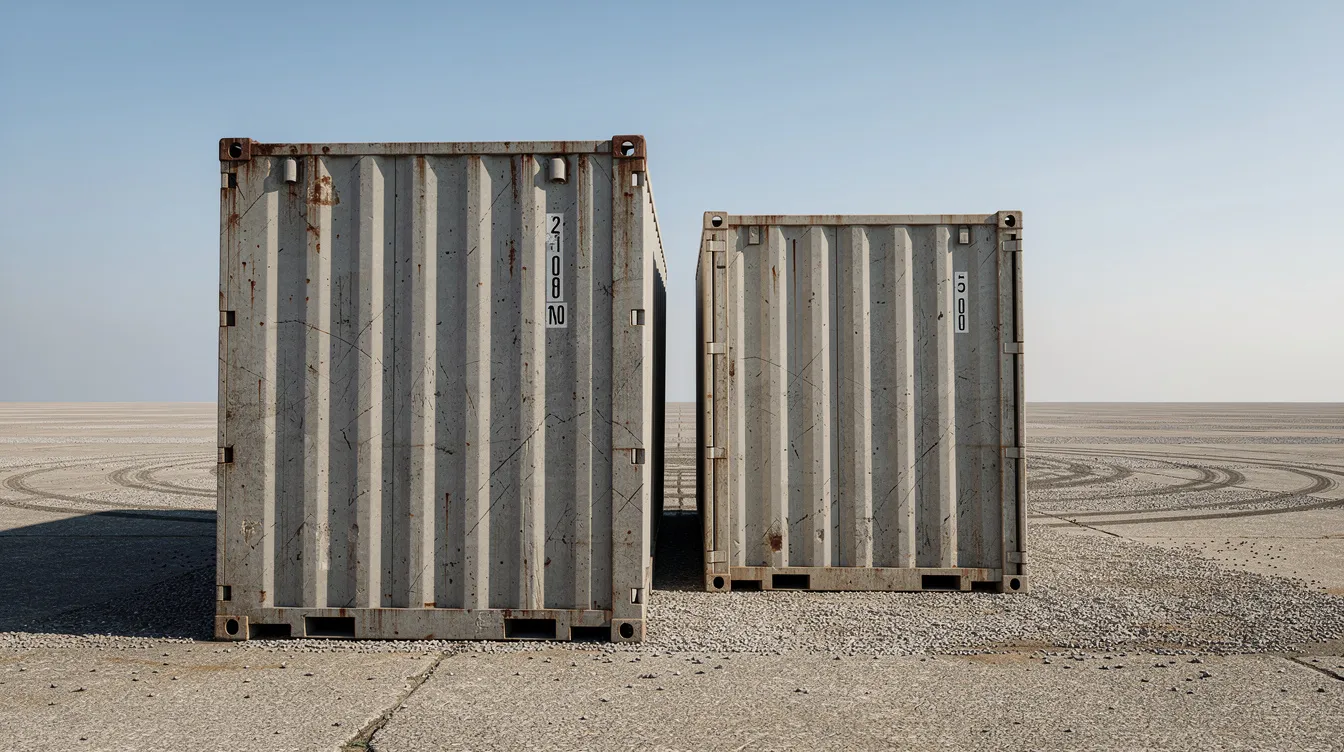
shipping containers for sale to industrial, commercial, and private buyers across the U.S. Each unit features Corten steel construction with corrugated walls, heavy structural corner posts for stacking and lifting, lockable doors on one end, and marine-grade plywood flooring that should be at least 28 mm thick. Every container sold by Container Management, Inc. is inspected and guaranteed Wind & Watertight at time of delivery.
Choosing the Right Size and Type for Storage
The right container depends on what you plan to store, how much space you need, and how often you'll access it. If you anticipate large loads, review the dimensions and capacity of 40-foot shipping containers before deciding, as oversizing slightly is almost always better than running out of space.
Here are the most common sizes Container Management, Inc. sells:
| Size | Interior Dimensions (L × W × H) | Floor Area | Volume |
|---|---|---|---|
| 20ft | ~19′3″ × 7′8″ × 7′10″ | ~160 sq ft | ~1,170 cu ft |
| 40ft | ~39′5″ × 7′8″ × 7′10″ | ~320 sq ft | ~2,700 cu ft |
| 40ft High Cube | ~39′5″ × 7′8″ × 8′10″ | ~320 sq ft | ~2,694 cu ft |
Standard shipping containers are 8ft wide and 8.5ft high. A 40ft container offers roughly 2,700 cubic feet of storage - equivalent to two 20ft containers in total capacity. High Cube containers provide extra vertical space for taller items like stacked pallets, racking systems, or large equipment.
New 10ft units are available currently only at the Chicago depot and serve well where space is tight, though they carry a higher container price per square foot. Specialized containers may include Refrigerated, Open-Top, and Tunnel containers - plus Open-Side and Flat Rack options - available as inventory allows.
Before choosing, measure your longest, widest, and tallest pieces. If you're storing 48×40 pallets, riding mowers, or 12-ft lumber, confirm that the interior dimensions and door opening can accommodate them.
Container Grades, Quality Assurance, and Intended Use
Container grade directly affects price, appearance, and whether a unit qualifies for export. Container Management, Inc. does not sell "As-Is" containers.
- New / One-Trip: One-trip containers are essentially new with minimal wear, having made only one ocean voyage. They usually last 25–30 years with minor maintenance and carry the highest shipping container cost.
- Cargo Worthy (CW): Structurally sound used units eligible for ISO Cargo Worthy / CSC certification when requested. Some used containers are retired from steamship lines after 13–20 years of service but remain robust for storage. Used containers can also be certified as Cargo Worthy for export. Cargo Worthy certification ensures containers meet structural standards for transport.
- Wind & Watertight (WWT): Sealed against wind and water at delivery - ideal for static long-term storage at a more budget-friendly price. Wind & Watertight condition is crucial for used containers intended for dry storage.
Always inspect for leaks, daylight, and rust upon delivery or depot out-gating of a container. Inspect used containers for holes affecting functionality. Container Management, Inc.'s quality assurance process includes depot inspections, rejection of structurally compromised units, and a clear guarantee of WWT condition at delivery.
What Drives Shipping Container Cost?
There is no single fixed price for shipping containers. In 2026, costs are shaped by global steel markets, local inventory levels, and buyer specifications. Core price drivers include:
- Size: 40ft units deliver better value per square foot than 20ft; 10ft units cost more per square foot due to lower production volumes.
- Grade: New One-Trip costs more than CW, which costs more than WWT.
- Specialty features: Open-Side, double doors, or refrigerated units carry premiums.
- Delivery distance: Delivery costs vary based on distance and service chosen.
- Modifications: Cut-outs, windows, insulation, or basic HVAC add cost, especially when containers must ship to and from Container Management, Inc.'s Chicago fabrication shop.
Container Management, Inc. does not offer financing or rent to own. The process is a straightforward, one-time purchase. Request a free quote with your zip code to obtain current shipping containers for sale near you, with delivery, taxes, and export certification itemized.
Delivery, Site Preparation, and Access Requirements
Successful delivery depends on the right truck and a prepared site. Container Management, Inc. arranges delivery through its nationwide trucking network for containers it sells.
Delivery typically takes 4 to 7 business days after purchase. Delivery by a tilt-bed truck is available within a 200-mile radius of depots, placing the container on the ground. For longer distances we use a flat-bed broker for delivery. This process requires that you have a forklift or crane lift the container off the truck and place it on the ground following specialized container delivery guidelines for access, safety, and site readiness. Delivery preparation includes ensuring clear access for the delivery vehicle. A 40ft container requires at least 120ft of clearance for delivery, while a 20ft unit needs roughly 60–75ft.
Containers should be placed on a stable, level surface to prevent warping - you can use crushed stone or gravel to promote drainage and keep doors operating smoothly. In some locations the driver can set the container on the ground; in others, buyers need a crane or heavy forklift. Confirm this detail during the free quote process.
Planning Storage Layout, Security, and Optional Modifications
Think through daily use before your container arrives. Place heavy, infrequently accessed supplies toward the rear. Leave a clear pathway for walk-in or forklift access. A 40ft High Cube is ideal when vertical racking matters.
A lockbox (comes standard on New containers only) protects the padlock and enhances security for shipping containers, and steel walls with lockable doors already provide strong theft deterrence. For added safety, use container-grade padlocks and verify door seals are intact.
Container Management, Inc. can coordinate limited modifications at its Chicago fabrication shop. Container modifications can include doors, windows, and insulation. Basic HVAC units can be installed in modified containers. Cut-outs for plumbing and electrical wiring can be made in containers, and interior wall installations can be customized in shipping containers. Electrical work in containers must meet local building codes.
Beyond storage, containers can serve as mobile offices at job sites, can be modified into pop-up shops or restaurants, and can form the building blocks of shipping container construction projects ranging from additions to full structures, while shipping containers are used for cold storage in agriculture. However, Container Management, Inc. does not build container homes, provide full electrical or plumbing design, perform onsite installations, or install central HVAC. Buyers planning a highly customizable office space or retail build-out should work with local architects and licensed contractors, using Container Management, Inc. as the container supplier.
Regulations, Permits, and Long-Term Ownership Considerations.
While shipping containers function like portable storage containers or storage sheds, local zoning laws, HOA rules, and building codes can restrict placement. Check with your city or county planning department before purchase - especially in residential areas. Common issues include setbacks from property lines, limits on accessory structures, and requirements for foundations or tie-downs in high-wind regions.
For long-term storage, inspect roofs and door seals annually, remove standing water, and touch up surface rust. Long-term storage requires mitigation against moisture and condensation, and vents help reduce condensation inside a shipping container. A well-maintained used CW or WWT container purchased in 2026 can provide reliable, secure service well into the 2040s and beyond. When in doubt, a 40ft or 40ft High Cube offers better flexibility and portability for future resale or repurposing.
Get Started: Buy a Storage Container from Container Management, Inc.
Whether you need a single 20ft unit for personal storage or a fleet of 40ft High Cubes for a multi-site construction project, Container Management, Inc. has the inventory, the depot locations, and the delivery network to serve your specific needs, including regional options like Cincinnati shipping containers for sale. Every container ships with a Wind & Watertight guarantee, and export certification is available on request.
Ready to find shipping containers for sale near you? Whether you’re in major markets like Kansas City, MO, with new and used containers available or in surrounding areas, provide your zip code, desired container size, and intended use - and Container Management, Inc. will deliver a detailed free quote covering price, delivery, and any certification requirements. From Fortune 100 companies to individual landowners, the process is the same: straightforward purchasing, full ownership, zero hidden fees, supported by regional service hubs such as St. Louis shipping container sales and delivery.
Contact Container Management, Inc. today and fill your storage needs with a container built to last.
Frequently Asked Questions About Buying a Shipping Container
Do I need a foundation under my shipping container for storage?
A full concrete foundation usually isn't necessary. Place the container on compacted gravel, concrete blocks, or treated timbers at the corners to promote drainage and keep doors square. In wet or freeze–thaw climates, raising it a few inches above grade prevents corrosion. For heavy commercial installations, consult a local engineer to confirm the right foundation for your soil conditions.
Can I move my container later if my storage needs change?
Absolutely. When you buy storage containers from Container Management, Inc., you own them outright - store them, move them, or resell them as you see fit. Moving typically requires a tilt-bed truck, roll-off truck, or crane. Keep access paths clear if you anticipate relocating the container within a few years, and remember that an empty 40ft box weighs over 8,000 lb.
Will a shipping container get too hot or cold for storage?
Unmodified steel containers can experience significant temperature swings in direct sun. For most tools, building materials, and non-sensitive business inventory, this isn't an issue. For electronics, certain chemicals, or fine furniture, consider positioning the container in partial shade, adding reflective roof coatings, or installing passive vents and a basic HVAC unit through Container Management, Inc.'s Chicago shop.
Can I use my storage container for overseas shipping in the future?
If transporting goods overseas is a possibility, purchase a Cargo Worthy grade container. Container Management, Inc. can provide ISO Cargo Worthy / CSC export certification for qualifying containers sold through the company. Export certifications are valid for 2 years; however, recertifying a Cargo Worthy container after this 2-year period will require extra work. Contact Container Management, Inc. for details.
What if I only need a container for a few months?
Container Management, Inc. does not rent containers and does not offer rent to own. However, many customers still buy for temporary projects because popular sizes like 20ft and 40ft hold strong resale value. Purchasing gives you a flexible, blank canvas asset with zero recurring rental fees - and you can resell once the project wraps, often recouping a significant portion of your investment.