Every container that crosses an ocean must prove it can handle the journey. For U.S. exporters and businesses buying their own boxes, understanding shipping container export certification is the difference between a smooth departure and a costly rejection at the terminal gate. This guide breaks down CSC plates, Cargo Worthy grading, inspection requirements, and how to make sure your container is actually cleared for international ocean transport.
Key Takeaways
- Shipping container export certification confirms a container is structurally safe and compliant for international ocean transport under the International Convention for Safe Containers (CSC), established by the IMO in 1972.
- "Cargo Worthy" is a condition grade describing structural soundness; a separate CSC inspection and documentation process is required to certify a container for export for privately owned containers. Cargo Worthy containers are not automatically certified.
- The CSC plate on the left-hand door displays safety approval data, dates, and weight limits-it is the first thing inspectors and terminals check.
- Container Management, Inc. sells ISO Cargo Worthy containers and can arrange export certification and delivery of certified containers we sell anywhere in the continental U.S.
What Is Shipping Container Export Certification?
Shipping container certification for export is the formal verification that a specific container meets the structural, safety, and marking requirements needed for international ocean transport. In the U.S. in 2026, this process is governed primarily by the International Convention for Safe Containers (CSC), which was established in 1972 by the International Maritime Organization-the United Nations specialized agency responsible for maritime safety and standardization across global trade.
Export certification focuses on structural integrity, safe handling capacity, and correct markings on the container itself. It does not concern the commercial value or nature of the cargo inside. CSC certification ensures containers meet international safety standards so that freight containers can be lifted, stacked, and transported aboard a vessel without endangering port workers, ship crews, or the cargo of other shippers. Certification is essential for international safety compliance to protect transport workers and cargo alike.
It is important to distinguish container certification (regulatory safety approval under CSC and ISO) from container grading, which uses terms like One-Trip, Cargo Worthy, and Wind & Watertight to describe cosmetic condition and structural quality. A container graded Cargo Worthy may be in strong shape, but it still needs valid CSC documentation before a shipping line will accept it for export. Each container requires its own individual certification. Once completed, a stamped date is placed on the CSC plate showing its current validation date and a certificate document is provided by the surveyor.
At Container Management, Inc., export certification applies only to containers we sell, primarily for shipper owned container (SOC) moves.
What Is a CSC Plate?
The CSC plate is the visible proof that a container has received CSC safety approval. It is a metal plate, typically stainless or non-corrosive, riveted permanently to the left-hand door of the container and marked "CSC SAFETY APPROVAL." The CSC plate must be visible on the container's left door at all times during international transport.
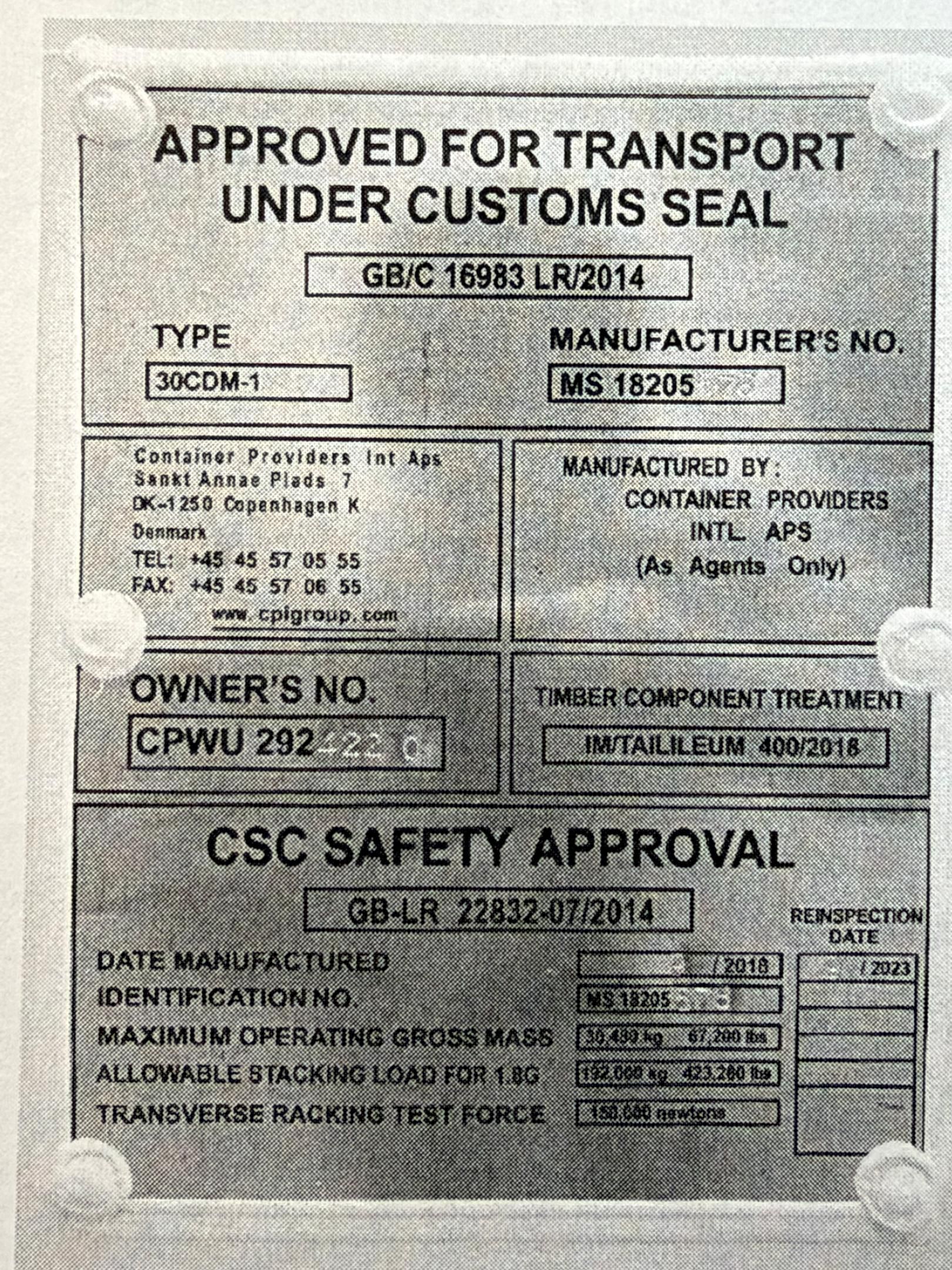
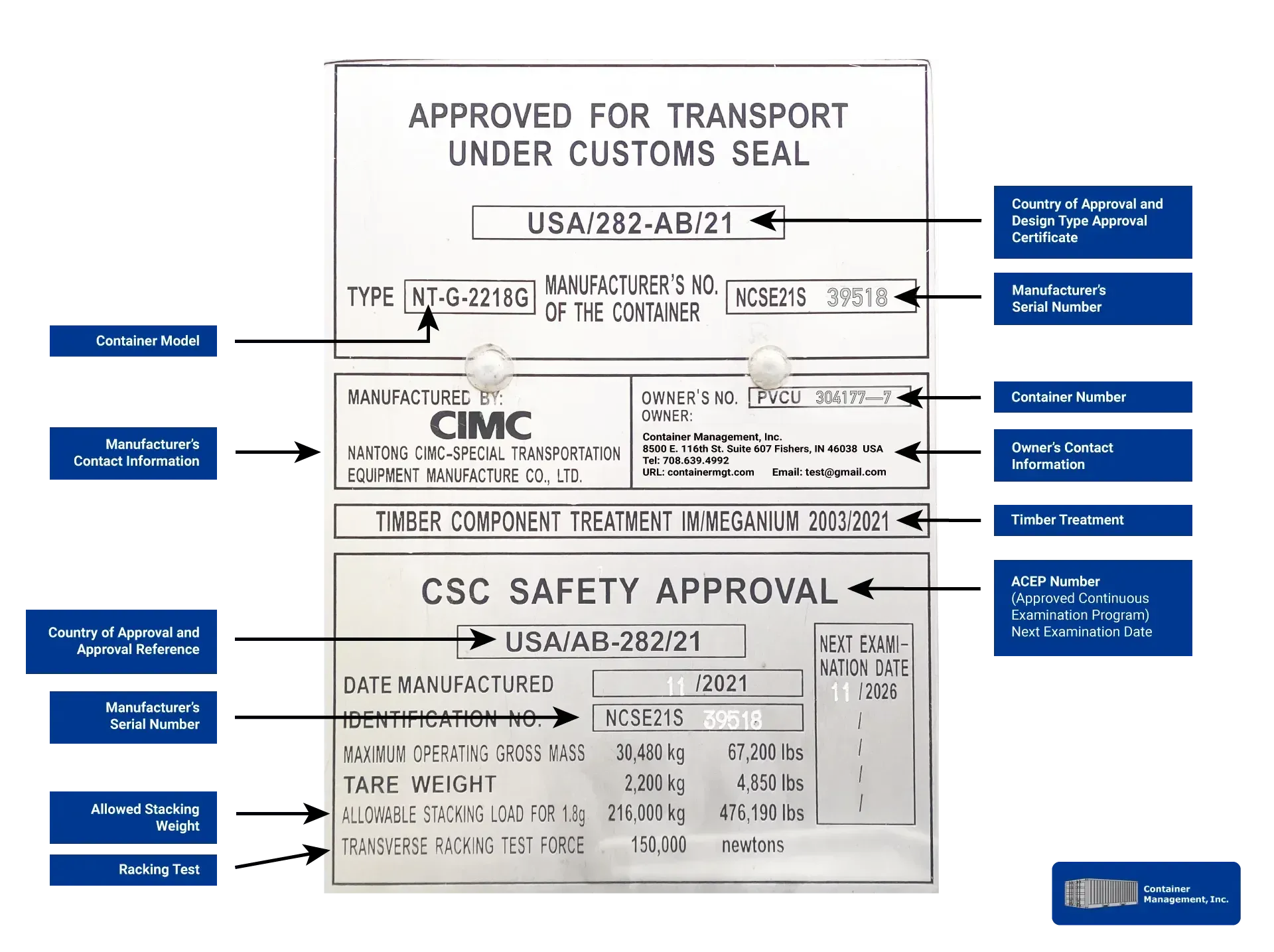
CSC plates include the approval reference and maximum gross weight, along with several other data points. Here is what a typical plate displays:
- Country of approval and approval reference number
- Date of manufacture (month and year)
- Container identification number (owner code, serial, check digit)
- Maximum gross weight (kg and lbs)
- Allowable stacking weight under 1.8g loading
- Transverse racking test load value
- Inspection scheme indicator: either a Next Examination Date (PES) or an ACEP code
The initial CSC safety approval lasts five years from manufacture. After that, the container must be re-examined under one of two accepted schemes. A missing, illegible, or obviously tampered CSC plate is an automatic fail for export-terminals and surveyors check it first. The plate alone does not prove ongoing compliance; its dates and inspection scheme must be valid on the sailing date. A new ocean certification is good for 18 to 24 months from the inspection date.
Field checklist when reading a CSC plate:
- Confirm "CSC SAFETY APPROVAL" wording is present and legible
- Verify country of approval and approval reference
- Check manufacture date; calculate whether initial 5-year window or subsequent examination applies
- Confirm maximum gross weight matches body markings
- Look for Next Examination Date (PES) or ACEP code
- Watch for signs of tampering-misaligned rivets, fresh welds, replacement plates
For a deeper walkthrough, see our guide on how to read shipping container CSC plates, markings, and export surveys.
CSC Certification Systems: PES vs. Approved Continuous Examination Program
CSC certification is not a one-time pass at the factory. Containers age, sustain structural damage, and undergo repairs over years of service. The CSC mandates regular inspections for shipping containers to maintain safety and compliance throughout their operational life.
Periodic Examination Scheme (PES) is the traditional system. Under PES, the first inspection must occur within five years of the original build date. After that, containers must be re-inspected every 30 months. The Next Examination Date is stamped on or near the CSC plate. If that examination date has lapsed by sailing day, the container is not valid.
The Approved Continuous Examination Program (ACEP) is an alternative recognized by the International Maritime Organization. Under ACEP, the container is examined each time it passes through significant repair, depot maintenance, or at equivalent intervals. ACEP allows ongoing inspections without scheduled re-examinations tied to a specific calendar date. Instead of a Next Examination Date, ACEP containers display an ACEP code on the CSC plate or a nearby decal.
Both systems are fully acceptable under the International Convention for Safe Containers. The applicable scheme is chosen and managed by container owners or the operating fleet. In practice, many large shipping lines prefer ACEP for their fleets because it integrates inspections into routine depot operations. Periodic inspections or ACEP ensure containers maintain safety and structural compliance regardless of which system is used.
When inspecting a container, look for the Next Examination Date (PES) or an ACEP marking. If neither is present or readable, the container cannot be confirmed as currently certified.
Cargo Worthy vs. Certified for Export
This distinction trips up more exporters than any other topic in the certification process. "Cargo Worthy" is a condition grade-it means a container has passed a structural inspection and is fit to safely carry cargo. But Cargo Worthy containers are not automatically CSC certified for export. A separate inspection and valid documentation are required to achieve that regulatory status.
Cargo-worthy certification confirms a container's structural integrity-no major defects, functional doors, solid floor, intact corner fittings. Cargo-worthy containers must have a valid CSC safety plate to move internationally. But a container can be graded Cargo Worthy for domestic use or storage without having current CSC validity. That gap is where rejections happen.
Understanding the three common designations:
Wind & Watertight (WWT) describes a container's ability to keep out rain and wind. It says nothing about stacking strength, load-bearing capacity, or CSC status. WWT is typically sufficient for static storage but not for ocean export.
Cargo Worthy (CW) adds structural soundness to the equation. A Cargo Worthy container has no structural defects or damage affecting its ability to hold and protect cargo. Containers must pass a seven-point inspection for cargo-worthiness. However, CW grade alone does not mean the CSC plate is current or that documentation is in order.
CSC export-certified means the container meets all of the above plus has documented regulatory compliance-valid CSC plate under PES or ACEP, correct ISO markings, and inspection records aligned with applicable rules. This is what carriers and terminals require.
Container Management, Inc. offers Cargo Worthy ISO containers and, when requested at purchase, can arrange CSC export certification on containers we sell. We do not certify containers owned by others. Always confirm both the grade and the certification status before booking a vessel as shipper owned equipment.
What Is Checked During Container Inspection?
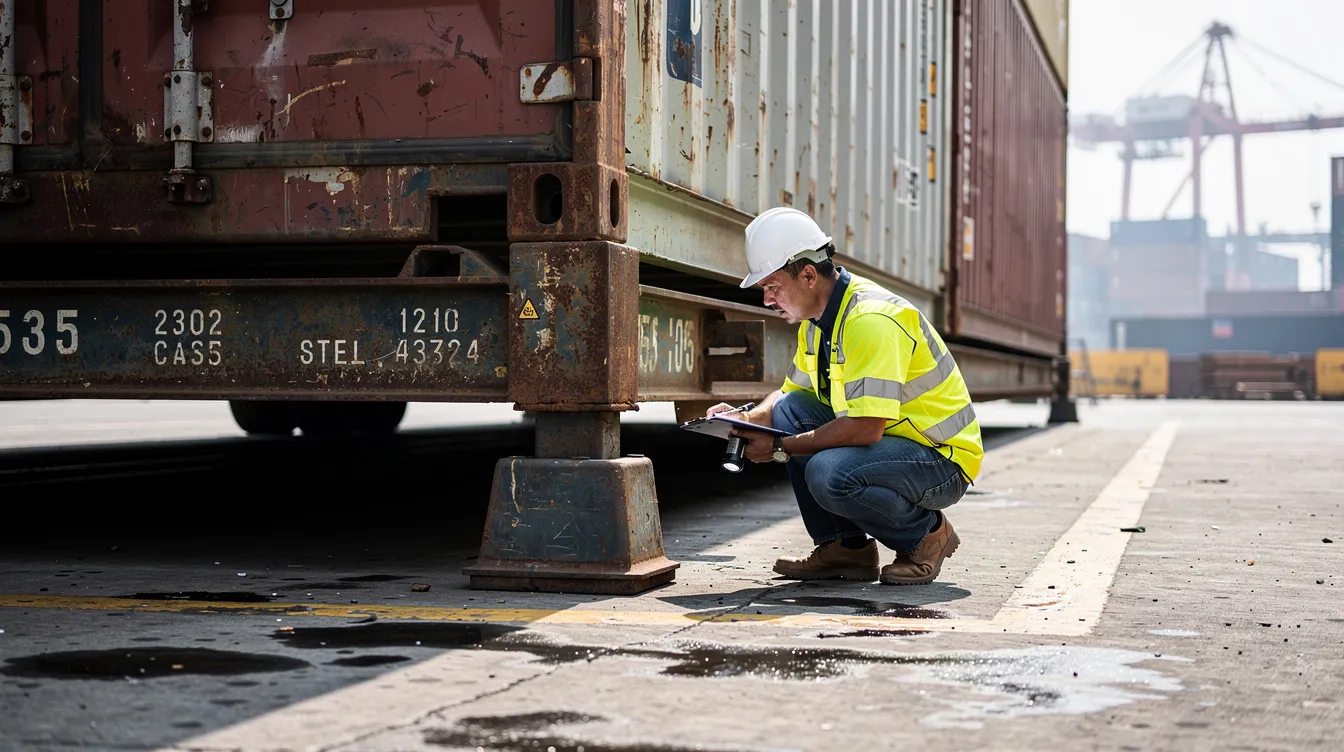
Export inspections follow applicable rules derived from CSC, ISO 1496, and ISO 1161 standards. Inspectors-whether IICL-certified, classification society surveyors, or qualified depot staff-focus on structural safety and correct hardware. Container export inspection is more detailed than a quick storage-condition check.
Key Structural and Safety Items
Corner fittings and corner posts: Cracks, deformation, or elongated bolt holes in corner castings are critical failures. These components bear all stacking and lifting loads. Shipping containers must be structurally designed to withstand heavy loads during transit, and corner fittings are where that strength is tested.
Side rails, cross members, and end frames: Severe dents, kinks, or corrosion that alter the container's intended geometry can prevent safe stacking and compromise operations aboard a vessel.
Floor: Inspectors check for soft spots, delamination, holes, and oil saturation. Floors-typically 28 mm marine plywood-must safely handle forklift and pallet loads. Materials that have deteriorated compromise the container's ability to safely carry its rated payload.
Roof and walls: A "light test" performed inside the closed container reveals pinholes or breaches. Water ingress during ocean transport can cause serious cargo damage. Proper container certification can mitigate risks associated with cargo damage during transport.
Doors and locking gear: Doors must open and close fully without excessive force. Locking rods, cams, keepers, hinges, and gaskets must function correctly for safe handling and securing of cargo.
Cleanliness and odor: Containers contaminated by previous cargo (chemicals, fishmeal, industrial materials) can fail inspection for food-grade or pharmaceutical shipments, even if structurally sound.
Documentation and Markings
Inspectors verify external markings consistent with ISO 6346: container identification number, size/type code, and weight markings that match the CSC plate limits. ISO 668 defines standard container dimensions and weight capacities, and all external markings must align. ISO certification standardizes container construction globally so that containers fit securely on different types of transport vehicles-ships, rail cars, and chassis.
Missing, conflicting, or painted-over markings raise red flags with customs or terminal operators. For dangerous goods, compliance with the IMDG Code and appropriate placarding is checked separately from basic CSC certification. Shipping container certification also includes documentation alignment with commercial invoices and packing lists to ensure consistency across the supply chain.
Certification Documents and Validity
Beyond the CSC plate, most export shipments need documentation proving the container's current certification status. Typical documents include a survey report, Cargo Worthy certificate, CSC certificate or attestation, and sometimes a condition photo set-especially when booking as a shipper owned container.
Certification intervals depend on whether the container is under PES or ACEP. Under PES, the initial CSC safety approval lasts five years from manufacture, with subsequent inspections every 30 months or less. Under ACEP, there is no fixed examination date, but in-service records must demonstrate continuous compliance through maintenance and depot inspections.
The critical point: certification must be valid through loading and departure, not just at the time of inspection or purchase. Some carriers impose even more conservative limits and may refuse containers with plates close to expiry. Containers must also undergo verified gross mass (VGM) assessments under SOLAS regulations before shipping-a separate but related compliance step.
Exporters should obtain copies of all certification documents in advance and share them with their freight forwarder or NVOCC. Using an uncertified shipping container can void marine cargo insurance policies, creating financial exposure well beyond the cost of a survey.
How to Purchase a Container for Ocean Export
If you are a business or individual shipper in the U.S. planning to buy a container for export, the process starts with matching the right container type and size to your cargo and your carrier's acceptance rules. Common export sizes include 20-foot, 40-foot, and 40-foot High Cube ISO containers. Different types of containers-dry cargo containers, thermal containers, tank containers, and offshore containers-each have their own applicable rules and testing requirements.
When requesting quotes, explicitly state that you need a "CSC-certified Cargo Worthy ISO container for ocean export." Vague requests for "used" or "storage grade" units often result in containers that cannot be certified. Exporting containers requires compliance with various international standards, so clarity upfront saves time and money.
Container Management, Inc. does not rent containers and does not deliver containers we did not sell. We sell 20-foot and 40-foot standard and High Cube ISO shipping containers, including One-Trip and Used Cargo Worthy units. Export certification is performed when the container is intended for export-it is not applied automatically to every Cargo Worthy sale. Ten-foot containers are only available New at our Chicago and other select depots and are typically not used for standard ocean export.
Practical Steps With Container Management, Inc.
- Define your intended use and destination country. Confirm any special requirements from the importing nation.
- Verify SOC acceptance with your carrier or freight forwarder before purchasing.
- Request a quote from Container Management, Inc. specifying export-certified needs via our quote form.
- Approve inspection and certification. We coordinate the CSC survey and any needed repairs on containers we sell.
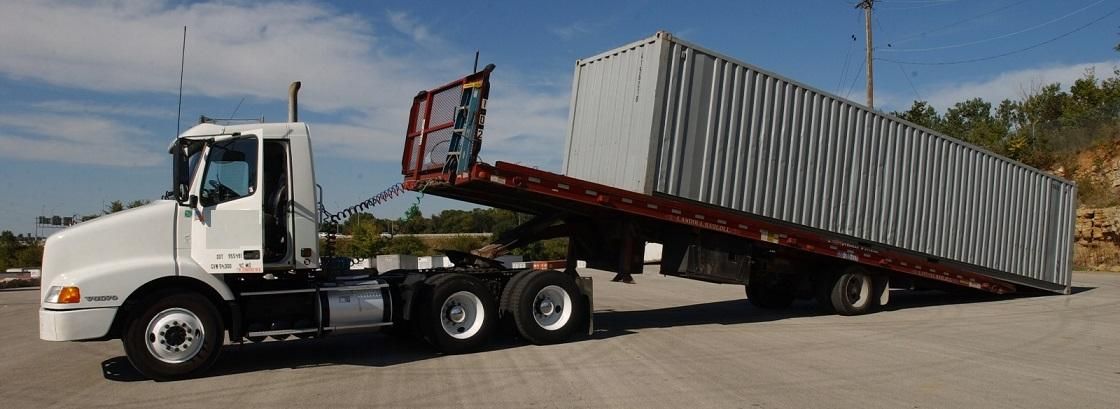
- Arrange delivery or depot pickup. Standard tilt-bed truck delivery within roughly 150–200 miles of a depot typically takes about 3–7 business days after purchase. Longer-distance flatbed delivery can be arranged on a case-by-case basis.
We guarantee containers we sell will be Wind & Watertight at the time of delivery and can supply Cargo Worthy units with export certification added as requested. We do not offer financing-we recommend working with your own lending institution if needed.
Common Export Container Certification Questions
Many exporters confuse container grading, CSC certification, and customs or security requirements. These are separate layers of compliance, and ensuring compliance with each one matters.
Who is responsible for certification? Container owners and operators must maintain CSC validity. However, the exporter or freight forwarder must verify certification status before booking the container onto a vessel. Inspectors at terminals will enforce the rules regardless of who dropped the ball.
How does CSC certification interact with other requirements? IMDG Code compliance for dangerous goods, CTPAT-style security inspections, and customs documentation are all separate from CSC safety approval. They stack on top of it. Meeting one does not satisfy another.
What happens if you ship without valid certification? Shipment rejection at the terminal gate, costly re-stuffing into a certified container, missed vessel cutoffs, potential fines from authorities, and voided insurance coverage. Structural inspections determine the integrity and safety of shipping containers, and skipping this step is a risk no exporter should take.
Quick pre-booking checks-verifying the CSC plate, reviewing the latest inspection report, and visually checking for obvious structural damage-give exporters greater confidence and prevent most last-minute surprises in the maritime industry.
Work With Container Management, Inc. for Export-Ready Containers
Container Management, Inc. is a family-owned wholesaler with a nationwide depot network. We supply New One-Trip and Used Cargo Worthy containers that can be certified for export on request. Our company focuses on selling and delivering containers-not renting, not trucking independent cargo-and our ocean shipping containers include delivery and, where needed, export certification services.
If you know you need CSC export certification, contact us early in your planning. Allow time for inspection, documentation, and delivery ahead of your vessel cutoff date. Explore our shipping container grades guide, used container listings, and certification overview page for more detail.
- Nationwide availability across the continental U.S. from strategically located depots
- ISO Cargo Worthy export options with CSC certification arranged at purchase
- Realistic delivery timeframes with standard tilt-bed service within 150–200 miles
- Practical guidance on certification terminology, so you know exactly what you are buying
Frequently Asked Questions About Shipping Container Export Certification
The following questions address practical issues U.S. exporters and project shippers commonly raise. Answers are informational-always confirm final requirements with your carrier, freight forwarder, or local authority.
How far in advance should I arrange export certification before my vessel cutoff date?
Plan to purchase and certify your container at least two to three weeks before the terminal's earliest receiving date. Container Management, Inc. can often deliver within 3–7 business days within 150–200 miles of a depot, but scheduling a CSC survey and any repairs can add another week. Build in a buffer for export bookings and stuffing schedules.
Can a modified shipping container be certified for export?
Structural modifications-large side openings, cut-out sections, added doors, or rooftop structures-can affect CSC compliance and may prevent certification if they fall outside ISO standards or were not approved by a classification society. Container Management, Inc. can provide some modifications at our Chicago fabrication shop, but for export moves we generally recommend standard ISO containers. Confirm feasibility with your carrier before assuming a modified unit can ship internationally.
Is a Wind & Watertight container enough for ocean export?
No. Wind & Watertight describes weather sealing but does not address stacking strength, load capacity, or CSC validity. For international ocean export, most carriers require containers to be both Cargo Worthy and backed by current CSC certification. WWT alone is typically acceptable only for static storage.
Who pays for export inspection and CSC certification on a Shipper Owned Container?
When the shipper owns the container, the shipper or their supplier typically pays for the inspection and any repair work needed for compliance. When you buy from Container Management, Inc. and request export certification, we can bundle inspection and documentation into your purchase, with costs depending on container condition and location.
Can I use a very old container for export if the CSC plate is still valid?
Age alone does not automatically disqualify a container. However, after 16–26 years of service, many used containers require more frequent repairs and close inspection to remain Cargo Worthy. The deciding factors are structural condition and current CSC validity. Carriers and terminals may refuse containers that, while technically certified, show heavy corrosion, metal fatigue, or worn corner castings. Manufacturers build containers to last, but ongoing maintenance and testing are what keep them export-eligible.