Whether you need a container for ground-level storage or ocean export, understanding its condition before purchase is essential. A shipping container inspection checklist helps you evaluate the features that matter, ask informed questions, and confirm that the grade suits your intended use. However, inspecting a specific unit in person before purchase is not always possible. At Container Management, Inc., containers are typically inventoried at industrial depots where active trucks and heavy equipment make public access unsafe; insurance restrictions prevent us from allowing customers into these areas. This guide explains how to assess a container purchase and, especially, how to inspect the unit carefully at delivery.
Key Takeaways
- A thorough shipping container inspection checklist covers the exterior, structural condition, roof, doors, seals, floor, and interior cleanliness.
- Used containers can show normal wear, including surface rust, dents, and scratches. Deep corrosion, holes, soft floors, or door problems deserve closer attention.
- One-Trip, Cargo Worthy, and Wind & Watertight (WWT) describe different general conditions and intended uses; confirm the specific requirements for your project.
- Container Management, Inc. rarely accommodates pre-purchase inspection requests because inventory is held at industrial depots with restricted public access.
- Carefully inspect your container at delivery and notify us immediately of questions or concerns, before the delivery truck leaves. This is the best opportunity to review condition together; resolving issues becomes more difficult after the driver departs.
Why Inspect a Shipping Container?
An inspection helps you decide whether a container is suitable for your cargo, storage needs, or project. Used shipping containers may have spent years in service, exposed to weather, salt air, handling equipment, and stacking loads. Their appearance and wear can vary, even when they share the same grade.
Typical uses range from ground-level storage on construction sites to inventory storage and ISO export shipping as Shipper Owned Containers (SOC). Each intended use has different requirements. A container suitable for general storage may not have the current CSC inspection or documentation required for international transport. Likewise, a container intended for export must meet the carrier’s requirements, not just look structurally sound.
A shipping container inspection checklist can help identify concerns such as water ingress, damaged goods risk, floor wear, or doors that do not close properly. Cargo load must be distributed evenly to prevent damage during transport, so the floor and frame should be suitable for the planned load. Confirm maximum gross weight and payload limits before loading.
Why depot access is limited
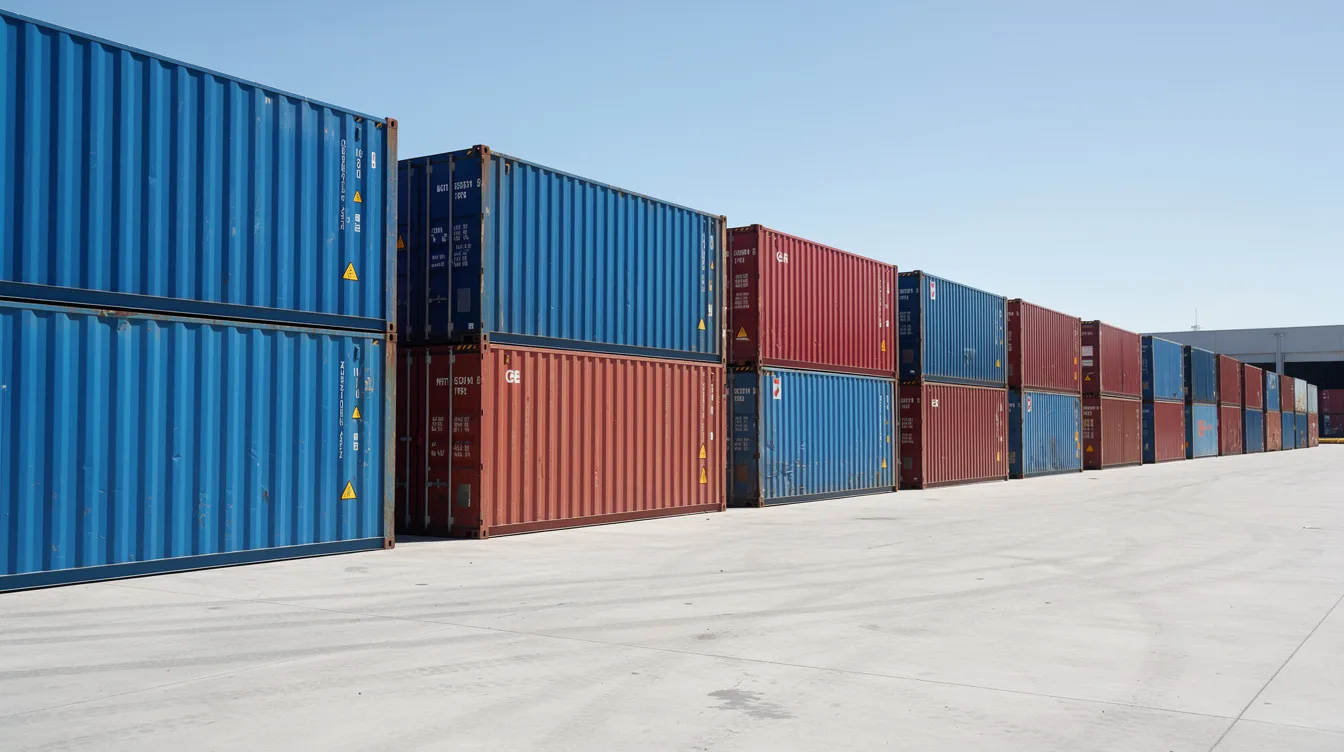
Container Management, Inc. rarely accommodates requests for pre-purchase inspection. Our inventory is stored at industrial depots, which are active work sites with trucks and other heavy equipment moving through the yard, where most containers are stacked 5 high. These are hard-hat areas, and insurance restrictions prevent public access. For safety and operational reasons, buyers generally cannot walk through the depot to inspect a particular container before purchasing.
That does not mean you should skip evaluating the purchase. Before ordering, ask about the grade, intended use, available condition information, and delivery process. Then make a careful inspection at the delivery site. We have a separate blog about inspecting containers at the time of delivery; that is the key moment to check the unit and raise any concerns directly.
Exterior Inspection: Rust, Dents, and Structural Damage
When you can view the container—particularly at delivery—start with a full walk-around. Whether it is a 20-foot, 40-foot, or 40-foot High Cube (HC), the exterior can reveal structural integrity issues and other signs of wear.
Check these areas:
- Sidewalls and front wall: Look for large dents, buckling, creased steel, or cracks. Scratches, faded paint, and minor dents are common on used containers. Extensive bends or crushed corner castings may affect the container’s suitability for stacking or transport.
- Bottom side rails and seams: Look for corrosion, flaking metal, deep pitting, or holes. Surface rust is common, but deep corrosion can weaken structural integrity.
- Corner posts and castings: Check for visible cracks, twisting, or impact damage. These components help support the container when it is handled and stacked.
- Roofline: From a safe vantage point, look for sagging, severe dents, patching, or signs of standing water. Do not climb onto the container unless you have the appropriate access and safety equipment.
Rust can be cosmetic or structural. Inspect corners and seams for signs of corrosion; deep pitting and holes indicate more serious issues than surface discoloration. Containers over 10 years old may develop roof pinholes, so pay attention to any leak concerns and ask the supplier what condition checks are performed.
Take dated photographs of visible defects, repairs, or areas you want to discuss. Inspection documentation should include photographs and records of defects. If you have a concern at delivery, contact Container Management, Inc. immediately, before the truck leaves your premises.
Checking the Roof, Doors, Gaskets, and Seals
The roof and doors are important barriers against wind and water. They also affect access and, in some cases, whether a container can be used for export.
Roof and leak checks
Look for dents that could collect water, holes, damaged seams, and questionable patches. A basic light test can help identify openings: enter the container during daylight, close the doors, allow your eyes to adjust, and look for visible daylight along the roof, walls, floor line, and door edges. Check for holes or visible daylight in the container. A light test can reveal potential openings, though it is not a guarantee of performance in every weather condition.
A Wind & Watertight (WWT) container should prevent wind and water entry. Inspect the roof for dents and standing water signs, and discuss any suspected leak promptly at delivery.
Door operation and seals
Open and close both shipping container doors. They should operate without excessive binding, and the locking bars should turn into place. Check hinges, handles, locking rods, and cam keepers for visible damage or missing parts. Verify that the container is on level ground when assessing door operation, since an uneven surface can affect how the doors work.
Inspect door gaskets for cracks or damage. Look for missing sections, hardened rubber, gaps, or areas that appear crushed. Check door seals for cracks to help prevent moisture ingress. If the doors do not meet evenly or the locking bars do not seat correctly, ask whether the issue could relate to the site being uneven, hardware wear, or frame damage.
Interior Inspection: Floors, Walls, and Moisture
After the container is placed, inspect the interior before loading it or storing goods. Look at the floor, walls, ceiling, and overall cleanliness.
Container floor inspection
Walk carefully across the full floor and check for soft spots, movement, cracks, rot, loose panels, or deep gouges. Ensure the flooring is secure and free of protruding nails. Pay particular attention near the doorway, corners, and sidewalls, where moisture or wear may be more noticeable. A solid floor should feel stable underfoot; any area that flexes unusually or appears damaged should be raised with the supplier immediately.
Walls, ceiling, and moisture
Look for rust streaks, water trails, discoloration, visible holes, and signs of prior repairs. Musty odors may indicate trapped moisture. Strong chemical or oil odors could point to residues from previous use. Containers must be clean and free from chemical residues to avoid contamination of cargo, especially when storing sensitive goods.
Check that interior lashing points and vents are secure and that walls are not significantly bowed for your planned use. A container that looks acceptable outside may still have interior defects, so complete this check before the delivery truck leaves whenever possible.
Understanding One-Trip, Cargo Worthy, and Wind & Watertight Grades
Condition grades describe a container’s general condition and intended use, but they are not a promise that every unit will look identical. Review our shipping container grades guide and confirm the grade that fits your project.
- One-Trip: New containers that have typically carried one shipment from the manufacturing location. They generally show less wear than Used containers, though handling marks or minor blemishes may occur.
- Cargo Worthy (CW): Used containers inspected for structural suitability for cargo transport. Cargo Worthy does not automatically mean the unit is certified for shipping. Export certification is a separate process, and requirements should be confirmed for the intended route and carrier.
- Wind & Watertight (WWT): Used containers inspected to confirm they prevent wind and water entry. They are commonly selected for ground-level storage, but may not have a current CSC inspection for export.
Containers intended for international transport need a valid CSC plate and applicable documentation. The Container Safety Convention (CSC) sets international safety requirements for containers. Confirm that the container identification matches shipping documents and that export certification is in place when required. High-security ISO 17712 seals must match the bill of lading for security verification when applicable.
Refurbished containers can vary in the extent of repairs. Ask what work was completed rather than assuming the term indicates a uniform condition. For help comparing options, see our shipping container buying guide.
What to Ask Your Shipping Container Supplier
Because pre-purchase depot access is generally unavailable, ask questions before ordering and request any available information about the unit or grade. Useful questions include:
- What grade am I buying? Confirm whether the unit is New One-Trip, Used Cargo Worthy, or Used Wind & Watertight, and what that grade means for your use.
- What is included in the condition description? Ask about known repairs, visible wear, and the inspection process. Do not assume all units in a grade have identical appearance.
- What documentation is provided? For export, confirm whether the supplier can arrange certification for a container it sells and what documents are available. Proper documentation should identify the container and its certification status.
- What are the delivery arrangements? Standard tilt-bed delivery within roughly 150–200 miles of a depot typically takes 3–7 business days or sooner, depending on the situation. Delivery outside that radius may require a flatbed and timing can vary.
- What should I do if I notice an issue at delivery? Ask how to contact the supplier immediately. Inspect before the driver leaves and communicate any concern while the truck is still on site.
- What are the loading limits? Verify maximum gross weight and payload limits before loading, and plan for an even cargo distribution.
Container Management, Inc. sells containers and coordinates delivery for containers it sells; it does not rent containers or deliver units purchased elsewhere. Browse Used shipping containers for sale to review available options.
Printable Shipping Container Inspection Checklist
Use this checklist to prepare your questions and to inspect the container at delivery. Since depot access is restricted, the delivery inspection is especially important. Raise questions immediately and before the driver leaves the site.
| Category | Inspection item | Check |
|---|---|---|
| Identification | Container number and size match the order and documents | ☐ |
| Identification | CSC plate present and legible if required for export | ☐ |
| Documentation | Record condition concerns and take dated photographs | ☐ |
| Exterior | Sidewalls and front wall have no concerning bends, cracks, or structural damage | ☐ |
| Exterior | Rails, corner posts, castings, and seams checked for deep rust or holes | ☐ |
| Exterior | Roof checked for pinholes, severe dents, and signs of standing water | ☐ |
| Doors and seals | Both doors open and close; locking bars and hinges function | ☐ |
| Doors and seals | Gaskets are present and checked for cracks, gaps, or damage | ☐ |
| Interior | Floor checked for soft spots, rot, cracks, loose panels, and protruding nails | ☐ |
| Interior | Walls and ceiling checked for daylight, water trails, or holes | ☐ |
| Interior | Interior is clean and free of concerning odors or residues | ☐ |
| Grade and use | Grade matches the order and is suitable for the intended use | ☐ |
| Delivery | Any quality questions raised with Container Management, Inc. before the driver leaves | ☐ |
For a buyer, the priority is to understand the condition and intended use, then complete a careful delivery-day review.
Frequently Asked Questions About Container Inspections
Can I inspect a container at the depot before I buy it?
Container Management, Inc. rarely accommodates pre-purchase inspections. Inventory is held at industrial depots where trucks and heavy equipment are active, and insurance restrictions prevent public access. Ask your sales representative about the container grade, available information, and delivery process, then inspect the unit carefully when it arrives.
When should I report a quality concern?
Inspect the container at delivery and notify Container Management, Inc. immediately if you have a question or concern—before the delivery truck leaves your premises. This is the ideal window to review the container’s condition together. Once the driver has left, it becomes more difficult to address quality concerns.
Title or QuestionHow do I check whether a container is Wind & Watertight?
Inspect the roof, walls, door seals, and floor line for holes or gaps, and use a light test from inside to look for visible daylight. A WWT container should prevent wind and water entry. Discuss any concern at delivery rather than waiting until after the driver departs.
Is rust always a problem on a Used container?
No. Surface rust is common on Used containers and may be cosmetic. Deep pitting, flaking steel, holes, or corrosion on structural components are more serious and should be reviewed before accepting the unit.
Does Cargo Worthy mean the container is certified for export?
Not automatically. Cargo Worthy describes structural suitability for cargo transport. Export certification is a separate process, and customers should confirm the documentation and carrier requirements for their shipment.
Does this checklist cover reefer containers?
This guide focuses on standard dry containers. Refrigerated containers require additional checks of the refrigeration unit, temperature controls, electrical connections, and insulated panels. Open-top, flat rack, and other specialty containers also have inspection needs specific to their design.
Inspect at Delivery—and Make the Most of That Moment
A thoughtful container inspection checklist helps you choose a suitable grade and prepare for delivery. Since public access to our industrial depots is restricted, the most important opportunity to assess your specific container is when it arrives at your site. Check the exterior, doors, seals, floor, and interior before the delivery truck leaves, and contact us immediately with any questions about condition. Prompt communication at the delivery site gives us the best opportunity to review concerns; after the driver departs, resolving quality issues can be more difficult.
Container Management, Inc. sells New One-Trip and Used Cargo Worthy and Wind & Watertight containers in 20-foot, 40-foot, and 40-foot High Cube sizes through a nationwide depot network. We can arrange export certification for Cargo Worthy containers we sell when required. Explore our Used container inventory, learn about container grades, or request a quote to discuss your needs and delivery options.