Key Takeaways
- Most shipping containers are corten steel structures with marine grade plywood or bamboo flooring, precision-built by container manufacturers under strict quality control and ISO standards.
- Container Management, Inc. supplies new and used containers across the U.S., all built from these standardized materials and components.
- Materials like corten steel, marine grade plywood flooring, cargo doors, corner castings, cross members, and forklift pockets directly affect lifespan, load capacity, and environmental impact.
- Buyers choosing containers for storage, export, or container modifications should understand container material basics before purchasing.
- Container Management, Inc. helps customers match container materials and conditions (Wind & Water Tight, Cargo Worthy, and New) to their specific use case.
Introduction: Why Container Material Matters for Your Project
Modern shipping containers are primarily made from Corten steel and engineered to meet ISO standards, where every material choice affects durability, safety, and modification potential. This article focuses on steel shipping containers commonly sold and supplied by Container Management, Inc. - not small consumer totes or plastic bins.
Understanding container material helps U.S. buyers choose between new vs. used units, 20-foot vs. 40-foot vs. 40-foot high cube, and storage vs. export vs. modification projects. While container manufacturers in Asia build most of the global fleet, U.S. wholesalers like Container Management, Inc. handle local supply, inspection, export certification, and delivery nationwide.
Core Structural Material: Corten Steel and Alternative Metals
Nearly all modern ISO shipping containers use corten steel for the main structure. Metal offers durability and protection against external elements, and metal containers offer excellent protection and are recyclable. Container Management, Inc. primarily sells steel containers suitable for heavy-duty storage, inland transport, and ocean export when properly certified. Steel's recyclability and long service life-often more than 25 years in service, longer for static storage - reduces overall waste.
Corten Steel (Weathering Steel) in Shipping Containers
Corten steel is a family of steel alloys designed to form a thin layer of stable, protective oxide that slows deep rust. Corten steel is known for its weathering properties and rust resistance, making it ideal for maritime environments. This weathering steel provides corrosion resistance that standard carbon steel cannot match - corten steel resists corrosion and eliminates painting needs in many situations, though coatings still extend life.
Container walls, roof panels, corner posts, cross members, cargo doors, and the frame are typically made from corten steel. Indicative thicknesses:
| Component | Thickness |
|---|---|
| Side walls & roof panels | 1.6–2.0 mm |
| Cargo doors | 2.0–2.5 mm |
| Cross members | 3–5 mm |
| Corner posts | 6–8 mm |
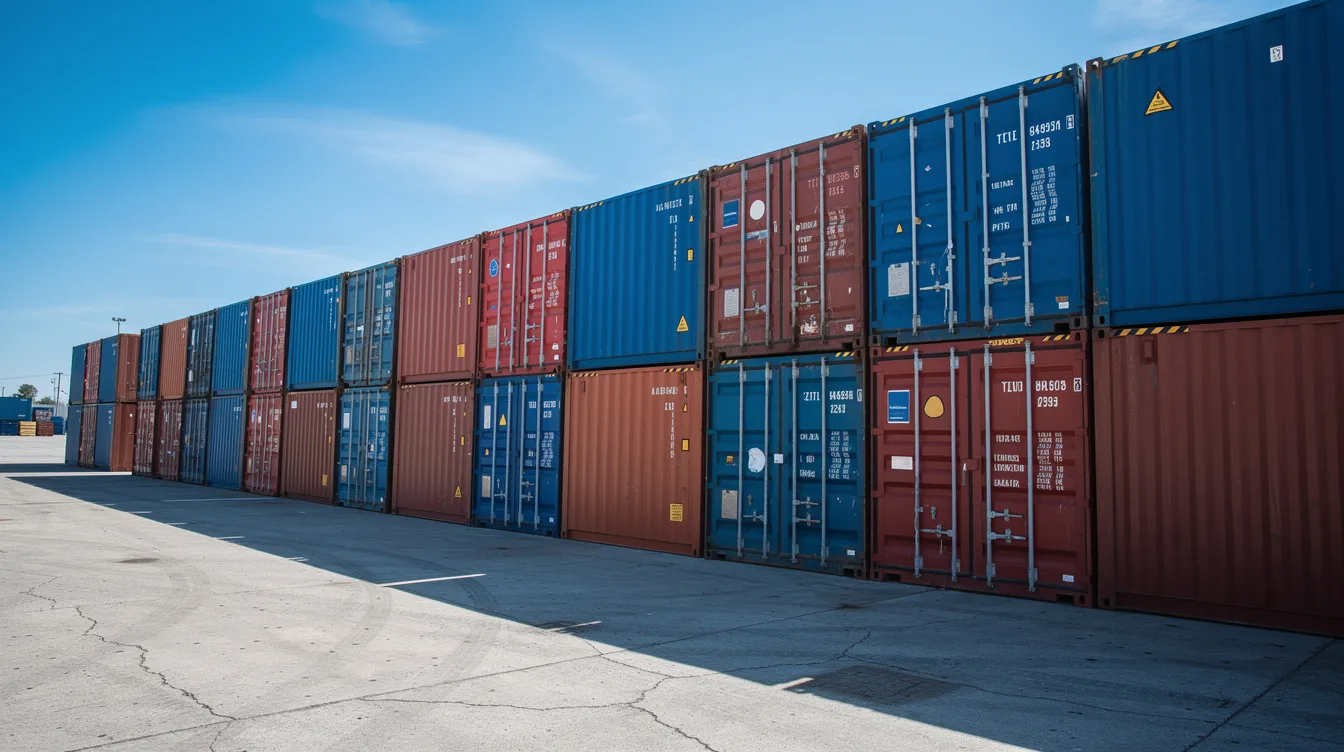
Corten steel containers can last well over 25 years with minimal upkeep. The high strength of corrugated steel panels allows containers to be stacked 8–9 units high on ships and in yards, crucial for commercial users buying multiple units from Container Management, Inc.
Aluminum and Other Metals (Selective Use)
Aluminium containers are lighter but less strong than steel containers, mostly used for air freight, specialized cargo, or lightweight applications. Aluminium containers are lightweight and corrosion-resistant, offering lower weight for reduced fuel costs and lower costs in transport-intensive operations. However, they have a higher purchase price, lower impact resistance, and limited stack heights compared to steel.
Most containers in U.S. storage and export markets served by Container Management, Inc. are steel ISO units with greater availability. Small amounts of other metals-galvanized steel, stainless steel-appear in hardware like locking mechanisms, hinges, and fasteners. High density polyethylene components occasionally appear in specialty fittings, while polyethylene containers are used separately for storing liquids and chemicals in industrial settings.
Container Flooring: Marine Grade Plywood, Bamboo, and Subfloor Structure
Floors must withstand heavy loads from forklifts and pallet jacks-typically up to 11,000 - 12,000 pounds per axle-making flooring materials critical. Marine-grade plywood flooring is commonly used in shipping containers, and Container Management, Inc. supplies containers with the original marine grade plywood flooring or bamboo flooring unless otherwise modified. Flooring replacement is available at select modification locations, including the Chicago shop.
Marine Grade Plywood Flooring
Marine grade plywood is approximately 28–30 mm thick-marine-grade plywood flooring is typically 1-1/8 inches thick-bonded with waterproof phenolic resins for high water resistance and heavy point loads. Marine-grade plywood flooring is moisture-resistant and durable, and it is designed for long-term outdoor use. However, "marine grade" does not mean fully waterproof; floors can absorb spills and may need sealing for workshop or office use.
Many original floor panels were treated with insecticides for international pest control. Customers planning human occupancy often install new floors or interior coverings. Container Management, Inc. can supply containers ready for interior build-outs and handle flooring installations at its Chicago facility.
Bamboo Flooring in Modern Containers
Many newer containers now use laminated bamboo flooring because bamboo is mildew resistant and a renewable resource, offering strong environmental impact advantages. Bamboo delivers high hardness, dimensional stability, and a distinctive woven appearance that some buyers prefer for modified units.
Performance under load is comparable to marine plywood when built to ISO specifications, making bamboo suitable for both export and heavy storage. Buyers working on habitable space may still install raised floors or insulation over bamboo to manage comfort and condensation.
Steel Cross Members and Substructure
Beneath the plywood or bamboo boards, steel cross members run from side rail to side rail, typically spaced every 12 inches (about 300 mm). Some manufacturers use i beams or C-profile sections for the floor frame, with a wall thickness around 3–5 mm.
Cross members lift the floor above the ground to reduce moisture ingress, improve airflow, and allow forklift pockets to function. Corrosion of cross members is a key inspection point for used containers; Container Management, Inc. visually inspects and grades units so buyers know substructure condition before purchase.
Key Components: Corner Castings, Corner Posts, Doors, and Handling Features
Beyond raw materials, standardized components-corner castings, corner posts, cargo doors, cross members, and forklift pockets-make containers intermodal and safe. Properly built containers carry a CSC plate confirming compliance for international transport. Container Management, Inc. sells ISO Cargo Worthy and Wind & Water Tight containers whose critical components support heavy loads for storage or export.
Corner Castings and Corner Posts
Corner castings are heavy, box-like steel fittings welded at all four corners with standardized openings for twist locks, spreader bars, and securing devices. Twist locks securely connect containers for transport and stacking, while corner castings allow containers to be lifted and stacked safely.
Corner posts transfer stacking loads straight down through the structure. Steel containers can support stacking up to 12 units high when fully loaded, and containers can support stacking up to 12 units high under proper conditions. Damage to castings or posts is serious-Container Management, Inc. screens out units with structural damage for customers needing export-worthy equipment. These components also serve as anchor points for modular construction projects.
Cargo Doors, Headers, and Sills
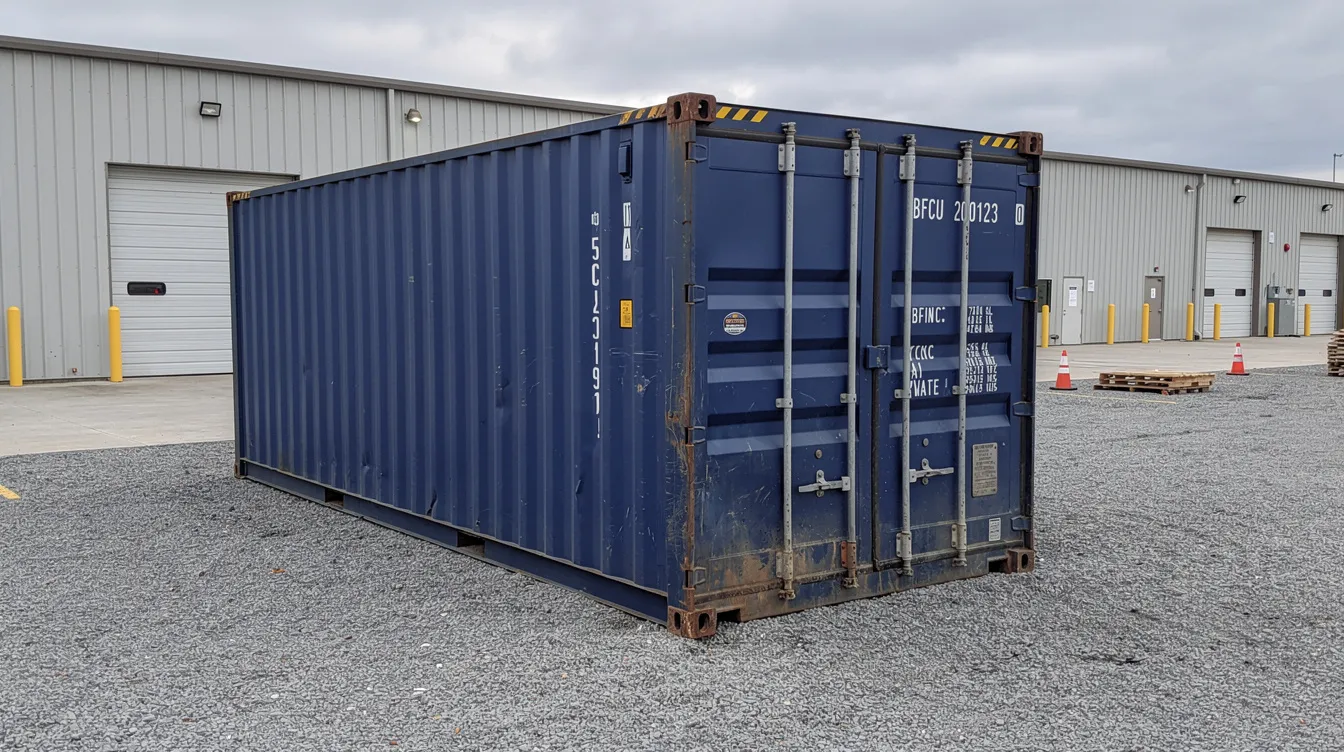
Standard containers have double-leaf cargo doors at one short end, made from corten steel panels with internal reinforcement and rubber gaskets for weather-tight sealing. Headers form the upper frame above the door opening, while sills serve as the lower thresholds-both are key structural elements.
Typical features include locking bars, cam keepers, recessed handles, and security provisions. Container Management, Inc. offers containers with standard end cargo doors and, in select location inventories, units with additional door configurations including double-door or side-door options, suitable for easy loading and unloading.
Forklift Pockets and Lifting Points
Forklift pockets are reinforced rectangular openings in the lower (bottom) side rails of all 20-foot and some 40-foot containers, spaced to accommodate standard forklift tines. They are intended for lifting empty or lightly loaded containers over short distances; fully loaded units are typically moved by tilt-bed trucks, cranes, or reach stackers.
Container Management, Inc. coordinates delivery using professional haulers, offering several shipping container delivery options. Buyers using on-site equipment should respect manufacturer weight limits and handling recommendations to maintain structural integrity.
Protective Coatings, Insulation, and Environmental Impact
While corten steel is inherently resilient, coatings and insulation systems dramatically influence long-term performance. Buyers planning custom designed workshops or offices will need insulation and possibly new coatings, which Container Management, Inc. can partially support through its modification services. Packaging materials should be chosen based on their durability and environmental impact-the same principle applies to container material selection.
Paints, Primers, and Anti-Corrosion Coatings
New containers are built with a zinc-rich primer and a highly durable topcoat-often polyurethane or similar-applied at the factory for salt spray, UV, and abrasion resistance. Anti-corrosion coatings extend the lifespan of shipping containers significantly. Used containers may show cosmetic rust and faded paint but can be re-coated to extend life for static storage.
For long-term projects in coastal or high-humidity climates, buyers should budget for surface preparation and repainting. Low-VOC coatings are increasingly available for eco-conscious projects.
Insulation and Interior Linings
Bare corten steel walls conduct heat and cold quickly. Proper insulation prevents condensation and improves comfort for offices, retail space, or conditioned storage. Temperature resistance is important for food storage containers kept inside modified units.
Common insulation approaches include:
- Closed-cell spray foam (polyurethane foam) - high R-value, moisture barrier
- Rigid panels (polystyrene foam) - cost-effective, easy to install
- Mineral wool - fire-resistant, good acoustic properties
- Fibreglass - also used as an insulation material in containers
- Vacuum insulation panels - minimize heat transfer in containers for specialized applications
- Reflective materials - help maintain consistent internal temperatures
Insulating materials include polyurethane foam and polystyrene foam as the most popular choices. Container Management, Inc. can perform some interior wall and insulation work at its Chicago facility, and buyers should also factor
overall shipping container costs across sizes and conditions into their project budgets, though electrical and on-site finishes typically require local licensed contractors.
Environmental Impact and Sustainability of Container Materials
Corten steel's recyclability and the reuse of retired containers reduce demand for new steel and concrete construction.
Bamboo flooring serves as a rapidly renewable material with lower environmental impact compared to slow-growing hardwoods. Container Management, Inc. supports sustainable reuse by supplying used containers in Wind & Water Tight and Cargo Worthy conditions ideal for second and third lives as storage or project solutions.
Manufacturing, Quality Control, and What Buyers Should Verify
Containers are mass-produced in specialized factories with standardized processes overseen by strict quality control procedures. While Container Management, Inc. is not a container manufacturer, it sources from reputable manufacturing facilities and focuses on in-field quality control, grading, and export certification for U.S. customers.
How Container Manufacturers Build Steel Containers
The main manufacturing stages include cutting and forming corten steel sheets, corrugating side and roof panels, fabricating frames and cross members, assembling the base, welding sidewalls and roof, and installing doors, corner castings, and forklift pockets.
Marine grade plywood or bamboo flooring is installed over cross members, screwed down, then sealed underneath to reduce moisture intrusion. After assembly, containers are blasted, primed, painted, and cured before receiving identification markings. Production time for a standard 20-foot or 40-foot dry container runs several weeks from coil steel to finished product.
Quality Control, CSC Plates, and Safety Standards
International standards like ISO 1496 and the Container Safety Convention govern structural requirements, testing loads, and periodic inspections. The CSC plate is a metal plaque indicating manufacturer, serial number, manufacture date, max gross weight, and the date of the latest safety inspection.
Factory quality control includes weld inspections, dimensional checks, door operation tests, and water ingress checks. Regular inspections help maintain long-term durability of containers throughout their service life. Container Management, Inc. provides Cargo Worthy certification for export containers it sells, ensuring CSC compliance for ocean shipping and coordinating container delivery logistics and site preparation.
What Buyers Should Inspect or Ask Before Purchasing
Key material-related checks include:
- Condition of corten steel walls and roof (deep rust vs. surface patina, structural dents)
- State of corner castings and corner posts
- Floor integrity-whether marine plywood or bamboo is original, replaced, or repaired
- Door operation including seals and locking mechanisms
- Container grade (New/One-Trip, Cargo Worthy, Wind & Water Tight) and valid CSC documentation
Container Management, Inc. helps through this process by pre-grading inventory, sharing representative photos, and arranging third-party surveys for large projects.
How Container Material Choices Affect Real-World Uses
The same base materials-corten steel, marine grade plywood or bamboo, standard cargo doors, and corner castings-support applications from simple ground storage to modular buildings. Container Management, Inc. mainly supplies base units and selected modifications; end users handle specialized build-outs.
Static Storage and On-Site Industrial Use
For ground-level storage of tools, equipment, and inventory, corten steel walls and roof plus marine grade plywood flooring provide ample strength and weather resistance in harsh weather conditions without major modifications. Used Wind & Water Tight containers from Container Management, Inc. are cost-effective for such applications given their durable materials and remaining service life. Common add-ons include lock boxes, interior shelving, and simple vents to reduce condensation.
Export Shipping and Shipper-Owned Containers (SOC)
Exporters using Shipper Owned Containers rely on material integrity and CSC compliance to avoid rejections at ports during cargo transport. Intact cross members, sound cargo doors with gaskets, and verified structural integrity are essential for safe stacking when stacked alongside other containers on vessels. Container Management, Inc. supplies ISO Cargo Worthy containers and arranges export certification so customers can use their own units rather than leased equipment-the right solution for frequent shippers.
Modification, Conversion, and Light Customization
The container's steel frame and corrugated corten walls make it a strong starting point for workshops, small offices, or site storage with added doors and windows. Container Management, Inc. can arrange modifications in Chicago: cut-outs for personnel doors and windows, limited glass installation, basic HVAC units, some insulation and interior wall systems, and flooring upgrades for customized spaces, with additional container sales and services available through its Columbus, Ohio operation.
Heavy structural changes require engineering review to ensure cuts in walls and roof are properly reinforced. Understanding original container materials helps contractors specify compatible insulation, coatings, and finishes that respect condensation risks and fire codes.
Frequently Asked Questions About Container Materials
Are shipping container floors safe for storing food, textiles, or household items?
Original marine grade plywood flooring was often treated with insecticides at the factory. For dry goods in sealed packaging, these treatments are generally not an issue. However, for direct food contact or residential use, food-grade materials should be non-toxic and certified safe-the FDA food-safe icon indicates compliance with safety standards for food-contact surfaces. Leak-proof containers prevent spills and maintain food freshness, and airtightness is crucial for preventing spills and keeping food fresh in dedicated food storage. Clear containers allow quick identification of contents and reduce spoilage in warehouse settings. Food storage containers must handle extreme temperatures safely, and safe food storage involves balancing safety, durability, and convenience. Many Container Management, Inc. customers add epoxy coatings, vinyl, or sealed overlays for peace of mind. Plastic containers may leach chemicals if not BPA-free, so always verify material certifications for food-contact applications.
Can corten steel containers be used in coastal or high-humidity climates without quickly rusting out?
Corten steel is specifically engineered for outdoor exposure and maritime environments, forming a stable oxide layer that slows deep corrosion even in salty air. In very harsh coastal climates, periodic washing, touch-up paint, and inspecting roof seams and door frames extend life significantly. Container Management, Inc. routinely supplies containers to coastal U.S. regions, including areas served from its Cincinnati, Ohio location, where many units remain structurally sound for decades with basic maintenance.
Is bamboo flooring as strong as traditional marine grade plywood?
ISO-compliant bamboo flooring is engineered with multiple laminated layers and phenolic adhesives, tested to the same load standards as hardwood marine plywood. It performs comparably for forklifts and heavy pallets when supported by sound steel cross members. Buyers should verify floor condition and load expectations with Container Management, Inc., especially when storing heavy machinery.
Do I need to replace the floor before converting a container into an office or workspace?
Full replacement is not always required. Many conversions add a moisture barrier, insulation, and a finished floor-such as plywood underlayment plus vinyl or laminate-over the existing marine grade plywood or bamboo. Replace the floor if it is heavily damaged, rotten, or if the project demands a clean substrate for sensitive manufacturing or long-term occupancy. Container Management, Inc. can assess condition and install new flooring as part of a modification package at its Chicago facility.
How can I be sure my container's materials meet export and safety standards?
Compliant containers carry a CSC plate with manufacture details and inspection dates, built to iso standards specifying steel grades, structural design, and load ratings. Purchase used Cargo Worthy containers from reputable suppliers like Container Management, Inc., who arrange third-party surveys and issue documentation. Keep copies of survey reports and CSC information with shipment records to avoid delays at ports.
Conclusion & Contacting Container Management, Inc.
Modern shipping containers rely on corten steel structures, marine grade plywood or bamboo flooring, and standardized components like corner castings, cross members, forklift pockets, and cargo doors to deliver decades of durability. Understanding these materials helps businesses and individuals find the right condition and configuration-whether for simple storage, SOC export, or modified office and industrial projects.
Reach out to Container Management, Inc. today for a fast quote on 20-foot, 40-foot, or 40-foot high cube containers, and let our team help you match the right container materials to your application.